Today was focussed on devices. We had some time with a Chromebook and an ipad. This integrated well with the Manaiakalani kaupapa because the explanation covered why these devices are the choices for use with the Manaiakalani model. There was also 101 Hapara Teacher Dashboard, a play with the Digital Dig anda chance to register for the Google Educator exam.
We were asked to create a screencast with reference to one of the content areas of the Manaiakalani cybersmart curriculum. I looked at Smart Media because I think this topic is a really interesting area for students and teachers to investigate. There is a lot of content that can be used or adapted to fit the age, stage and delivery angle, and it fits into a variety of learning areas for secondary school students.
Showing posts with label Kootuitui ki Papakura. Show all posts
Showing posts with label Kootuitui ki Papakura. Show all posts
Friday, 8 November 2019

Friday, 18 October 2019
DFI te rā tuarima
Today we had our second day on Google sites. We had a very quick look at each other's sites and gave feedback on them using a Google form. It was great to hear people talking about their sites as they reveal what they think are the most important features of their sites. However, there wasn't enough time to look carefully through each site and to give robust, quality feedback. Maybe we could have separated into groups of four so that we could have worked in a small group - sharing, asking questions, in discussion and giving feedback. These groups would contain people at different stages of site competence so that there would be opportunity for ako among the members. Anyway, the gold nugget today was quiet time to get some of the Trust website pages up-to-date.

Friday, 20 September 2019
DFI te rā tuawhā
Tohatoha - (verb) (-ina) to spread around, spread out, spread abroad, distribute, share, deal (cards). Not just LCS, but SLC, CLS and LSC etc. Today was about the use of a website to 'hook' (noun: matau) or entice people in, using a universal approach to designing learning and creating a multimodal website. I started a website with a focus on level 5 social studies, NZ history and Te Tiriti o Waitangi. Not having particular students in mind was the biggest disadvantage for me, but I have started gathering some text resources that may be of help to others. Click on the image to access the site.

Friday, 13 September 2019
DFI te rā tuatoru - kia awhiawhi hanga
Kia kaha te reo Māori. Whāia te ara poutama o te reo ka tohatoha ai - keep improving your language and share what you know. Ko tenei taku pepeha.
Friday, 6 September 2019
DFI te rā tuarua
Kia ora te whānau. Rāmere, 6th Hepetema, he DFI te rā tuarua. He reremahi ko te kaupapa. He pai ki ahau te taupānga Kūkara. Ināianei, i te mahi ahau te wātaka Kūkara, mahara Kūkara, īmera Kūkara, hui ataata Kūkara me te ripa rorohiko.
The create task was to use Quicktime to record a hangout meet and discuss a blog post. For some reason my internal microphone was not working and I only recorded the video with no sound, which I deleted. So, then I did a bit of troubleshooting and discovered that I needed to give Quicktime access to my camera and microphone, which was strange as I only used it about 2 -3 weeks ago for the Online Toolkits. Anyway, then I did a short test which is attached.
The create task was to use Quicktime to record a hangout meet and discuss a blog post. For some reason my internal microphone was not working and I only recorded the video with no sound, which I deleted. So, then I did a bit of troubleshooting and discovered that I needed to give Quicktime access to my camera and microphone, which was strange as I only used it about 2 -3 weeks ago for the Online Toolkits. Anyway, then I did a short test which is attached.
Friday, 30 August 2019
All things 'Doc(k)y'
DFI day 1 has been focused on Google docs. The first thing that hit me was the words and phrases that I am increasingly seeing in use. The current one for me is 'deep dive'. This has recently been coming at me from all directions. No, I'm not researching an underwater holiday, but encountering this term meaning 'taking a thorough look at or into a particular subject matter'. Gone are the words 'focus', 'probe' or 'enquiry'. That got me thinking about the nature of language and common kīwaha, or sayings, which perhaps not coincidentally was the topic of this week's Te Reo lesson for the course I am on. The one I liked from my lesson was 'pai kare' which means 'by golly!', so every time I hear or read 'deep dive', I am going to think 'pai kare'! My first love is language so it's quite hard to distract me from language musing most days.
Anyway, I did concentrate on the content and for my 'create' part of the day, I decided to do a revision of the Trust meeting agenda and add a table of contents. I have created newsletters in docs and drawings, but am currently trialling 'mailchimp' which is the app that most organisations use for a professional look and which also automatically manages the newsletter subscription list.
So here is my new look agenda. I will trial it with trustees until the end of the year.
Anyway, I did concentrate on the content and for my 'create' part of the day, I decided to do a revision of the Trust meeting agenda and add a table of contents. I have created newsletters in docs and drawings, but am currently trialling 'mailchimp' which is the app that most organisations use for a professional look and which also automatically manages the newsletter subscription list.
So here is my new look agenda. I will trial it with trustees until the end of the year.
Monday, 26 August 2019
Media Moments - part 1
This blog post will discuss the four national media events for Kootuitui ki Papakura in the last few months. They are a
1. TV interview - June 2019
2. Radio interview - July 2019
3. Radio news story - August 2019
4. TV news story - August 2019
The media we have been seeking is for national coverage of our Ko Huiamano: Warm, Dry, Healthy Homes programme. This programme is significantly different from other types of provision in this area because it is a community-led development model, being:
- developed by whānau through co-design
- delivered by whānau largely through their commitment to being volunteers
- built on the kaupapa of 'fill my kete, fill your kete'
- focussed on education for behavioural change rather than provision of goods
- not funded through any government scheme such as AWHI (Auckland Wide Healthy Homes)
The first national media event was a short segment on What's Next? where our Kootuitui Whānau were featured on episode 3 being interviewed by Nigel Latta. On Demand here and the text article here. This was excellent timing for us with the winter just getting underway and we felt so proud to be in the spotlight. It was wonderful meeting Nigel and the segment reflected fairly on our work. We received lots of 'congratulations' and 'you guys are doing amazing work' but no direct offers of support. There wasn't any direct link back to us as an organisation as the media didn't actually mention our name 'Kootuitui ki Papakura' or show our logo and the segment sounded a little like a group of people helping others without a charity or organisation behind them. At that stage, I hadn't started to harness the power of social media so after the screening, I shared the On Demand and text links and the euphoria of being on national TV ebbed away. Maybe the viewing demographic for this programme were not the people we were trying to reach?
We recently had support to publish a booklet which details the story of our Homes strand and the Ko Huiamano prototype and I was looking to once again get a national spotlight on our work. I began contacting reporters I knew and emailing TV sites. Then, quite suddenly, I was rung by Radio NZ to do an interview with Jesse Mulligan. This was recorded at 1pm one afternoon and published on their website. Through this interview people were beginning to become more aware of Ko Huiamano: Warm, Dry, Healthy Homes and understand how this part is situated within our whole scope of EDUCATION, HEALTH AND HOMES.
The same RNZ reporter who linked us with Afternoons with Jesse was really keen to attend a home installation and see what happens, in particular the effect of the bubble wrap on the temperature. This led to our Radio news story. This story was broadcast on Checkpoint with photos, video and commentary as well as a short article. This was a tenanted Housing NZ property which showcased our partnership with HNZ. At this stage the social media just took off, maybe because RadioNZ had the story as a feature article on their website.
Even though I had not received any direct replies to my approach to TV media, Te Ao News saw the second RNZ article and contacted me. They wanted to cover our work from a different angle and we agreed on an interview with Māori homeowners. The added piece to this story was that a warm house had had a positive impact on their health. The segment was screened on a cold, Friday, August evening and is here. This is such a positive story of helping our kaumātua and the impact of a home on the health of its occupants.
My next blog post will focus on the social media that has come from the mainstream media above. I am still looking for opportunities for publicity through mainstream media, so if you can assist me in any way, please leave a comment below and I will get back to you. Help us support by Māori, with Māori, for Māori for the improved lifelong outcomes of the young people of Papakura.
1. TV interview - June 2019
2. Radio interview - July 2019
3. Radio news story - August 2019
4. TV news story - August 2019
The media we have been seeking is for national coverage of our Ko Huiamano: Warm, Dry, Healthy Homes programme. This programme is significantly different from other types of provision in this area because it is a community-led development model, being:
- developed by whānau through co-design
- delivered by whānau largely through their commitment to being volunteers
- built on the kaupapa of 'fill my kete, fill your kete'
- focussed on education for behavioural change rather than provision of goods
- not funded through any government scheme such as AWHI (Auckland Wide Healthy Homes)
The first national media event was a short segment on What's Next? where our Kootuitui Whānau were featured on episode 3 being interviewed by Nigel Latta. On Demand here and the text article here. This was excellent timing for us with the winter just getting underway and we felt so proud to be in the spotlight. It was wonderful meeting Nigel and the segment reflected fairly on our work. We received lots of 'congratulations' and 'you guys are doing amazing work' but no direct offers of support. There wasn't any direct link back to us as an organisation as the media didn't actually mention our name 'Kootuitui ki Papakura' or show our logo and the segment sounded a little like a group of people helping others without a charity or organisation behind them. At that stage, I hadn't started to harness the power of social media so after the screening, I shared the On Demand and text links and the euphoria of being on national TV ebbed away. Maybe the viewing demographic for this programme were not the people we were trying to reach?
We recently had support to publish a booklet which details the story of our Homes strand and the Ko Huiamano prototype and I was looking to once again get a national spotlight on our work. I began contacting reporters I knew and emailing TV sites. Then, quite suddenly, I was rung by Radio NZ to do an interview with Jesse Mulligan. This was recorded at 1pm one afternoon and published on their website. Through this interview people were beginning to become more aware of Ko Huiamano: Warm, Dry, Healthy Homes and understand how this part is situated within our whole scope of EDUCATION, HEALTH AND HOMES.
The same RNZ reporter who linked us with Afternoons with Jesse was really keen to attend a home installation and see what happens, in particular the effect of the bubble wrap on the temperature. This led to our Radio news story. This story was broadcast on Checkpoint with photos, video and commentary as well as a short article. This was a tenanted Housing NZ property which showcased our partnership with HNZ. At this stage the social media just took off, maybe because RadioNZ had the story as a feature article on their website.
Even though I had not received any direct replies to my approach to TV media, Te Ao News saw the second RNZ article and contacted me. They wanted to cover our work from a different angle and we agreed on an interview with Māori homeowners. The added piece to this story was that a warm house had had a positive impact on their health. The segment was screened on a cold, Friday, August evening and is here. This is such a positive story of helping our kaumātua and the impact of a home on the health of its occupants.
My next blog post will focus on the social media that has come from the mainstream media above. I am still looking for opportunities for publicity through mainstream media, so if you can assist me in any way, please leave a comment below and I will get back to you. Help us support by Māori, with Māori, for Māori for the improved lifelong outcomes of the young people of Papakura.
Monday, 12 August 2019
Annual Stakeholders' Event
Last Wednesday we held the annual morning where we welcome sponsors, partners, schools and local community organisations to hear about our activities over the past year. It is a short showcase for our funders, sponsors and partners to get an insight into Kootuitui ki Papakura.
This year, the event was hosted at Papakura Central School and included a welcome to the 70-ish attendees, short presentations (above) from representatives who work in each of our three strands and a tour of 1:1 hubs and the school clinic. The Education strand was presented by four PCS students who showed attendees how they learn in an online environment through their teacher's visible website, some of the Google apps they use and the cybersmart learning around making positive, thoughtful and helpful comments on blogs. Having students present is always well received, as is hearing from whaanau who share their stories and others' stories of change through their engagement in the Homes strand initiatives.
This is our third year hosting this event and I have learnt through that time some things that have helped the planning for each successive year. These include the preparations that need to be made at the Trust level, at the school level and at the level of connecting with the various delivery partners. The run sheet invariably gets behind, so I have learnt to factor this into the programme and to break up the 'listening' activities with time for the attendees to talk, walk, network and have refreshments.
The Kootuitui team gets behind this event and pulls together to make it happen. Right now, there are 10 employees, including full and part-timers, with additional volunteers, and we are also supporting the salaries of about 6 FTE - so we are growing as a roopu.
Feedback has been overwhelmingly positive. Connections are continuing to be made with other organisations as we focus on our vision of improving the lifelong outcomes for tamariki in our community.

Thursday, 12 July 2018
Kootuitui Whaanau video using Adobe Spark
Finally, after many hours, I got the final version of the video saved and ready for sharing. I decided not to do a voice over as I didn't want to have more issues with it that would affect what I'd already achieved. I also decided to make it a square format as it's easier to view on a phone and tablet. The major learning has been to keep the number of slides small and to wait each time I uploaded an image so that the programme had time to save as I made it.
And then I uploaded my video to my Youtube channel and here it is there:
Wednesday, 11 July 2018
Manaiakalani Innovation Team - connecting with each other
In the final week of term 2, all the facilitators working in the Manaiakalani programme met together for debrief and planning days. We each had 5 minutes to talk about our work in our cluster over the term. Here is what I presented from Kootuitui. The first slide was a screenshot of what I found when I search Kootuitui ki Papakura in Google images. It shows our logo numerous times, our strands of work, some of our sponsors/supporters and also our links with Manaiakalani and other clusters. The second slide represents the children at the heart of our work - they are always happy to see us and engage in cybersmart learning. Slide three represents the difficulties at times of working in multiple strands, in various places with different people and trying to keep everyone on the same track. Slide four states the goals of our facilitators, and slide five focusses on how we best get the work done; by sharing.
Monday, 7 May 2018
Term 2 Digital Footprint
This is the resource I have put together for term 2 cybersmart - digital footprint. I started using this with five teachers last week. All classes have a slightly different version of this resource because I decided to make separate copies for each school to provide a similar base of content and then to cater for the differing needs of teachers and students. I expect that over the course of the term, the content will change further as I work with teachers and continue to co-construct.
Week 1 started well with discussing what happened recently with facebook. Many students thought that facebook's user data had been hacked, so we had some great discussions about what really happened and then why it is important to be aware of age restrictions for social networking sites, as well as how to keep your privacy settings up to date.
There are some things I still need to add including students making an up-to-date blog profile and building in blog posting and commenting - positive, thoughtful, helpful.
Two of my year 3-4 classes are still back working through a few more term 1 items and then I will begin an age-appropriate digital footprint curriculum for them.
Week 1 started well with discussing what happened recently with facebook. Many students thought that facebook's user data had been hacked, so we had some great discussions about what really happened and then why it is important to be aware of age restrictions for social networking sites, as well as how to keep your privacy settings up to date.
There are some things I still need to add including students making an up-to-date blog profile and building in blog posting and commenting - positive, thoughtful, helpful.
Two of my year 3-4 classes are still back working through a few more term 1 items and then I will begin an age-appropriate digital footprint curriculum for them.
Monday, 22 January 2018
Manaiakalani Innovation Team - Connecting with Each Other
Today I spent a great day with the Manaiakalani Innovation Team which comprised the Manaiakalani leaders, the outreach facilitators and education programme leaders of the first and second outreach clusters. The second outreach is beginning and the team has expanded greatly with wonderful educators coming onboard.
Through the day everyone delivered their 5-minute introduction. This was a way for people to connect with one another. The DLO above was my introduction. I have changed the first slide because I didn't have my pepeha (introduction in Te Reo Māori) written on it at he time. I hadn't put it there because I didn't want to read it. So I had it on my phone as a reminder. However, I used my phone too much and have decided to learn this by heart for the next time and learn to rely solely on my memory.
I shall not be able to join the group again during the week as I have Kootuitui orientation and meetings scheduled, but I am keen to join the weekly online meetings from the start of the term. There is so much we can share about our work and I can learn from the others of the group.
Friday, 22 September 2017
Kootuitui ki Papakura in action
I created this video, to be played before the beginning of Kootuitui's second AGM, rushing to do it before YouTube video editor ceased to exist on 20th September. I thought at first that I would create a slideshow of photos using Driveslides as I didn't need any sound. However, then I considered the time I was going to put into choosing photos for both options and decided that a video with music that could be turned on or off would be better. So then it was just a question of choosing photos and transitions of about 2 mins in length and an ambient piece of music to go in the background.
I chose photos of the Education and Homes strands mostly, with a few of the high school Health strand. I haven't been able to source any pictures of the health professionals in the primary schools' programme, so this is a gap in this video. In my speed to publish, another omission is that I forgot to add a date, a thank you or web address of Kootuitui at the end. Despite these things, the video is a pretty good montage of what has been happening in Kootuitui over the last year.
Wednesday, 16 August 2017
Book Creator
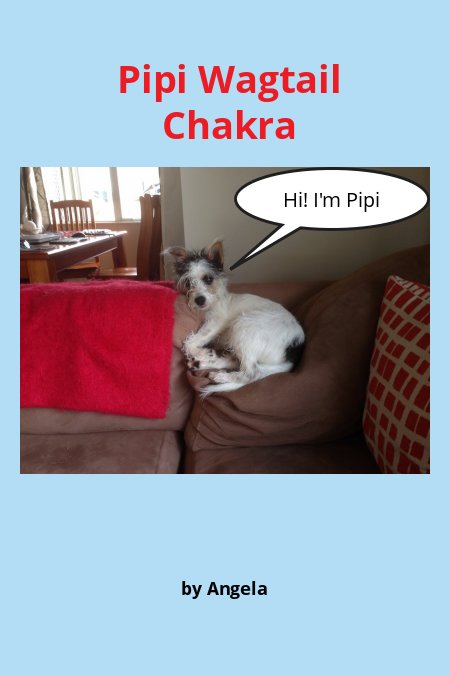
Here's a neat little app which is used with Chrome and a Google account, called Book Creator. It has been in the beta stage and has now been finished. I created this book with no difficulty in about 30 minutes, and although not much of a graphic artist, think that it looks quite good. What do you think? Have a try yourself at app.bookcreator.com. Once created, the author can get the html code to embed on a website or blog. There are many uses for this app - writing, storytelling, graphics with words and pictures. Shapes and call outs can also be added to give variety and individualisation, and pages can be added for long stories.
Friday, 12 May 2017
Uploading a movie (.MOV)
Thursday, 11 May 2017
Chatterpix
Story Builder
This was my first attempt with Story Builder. It was easy to use with a Google account. You really need to decide who your characters are and then start typing the dialogue among them. After this, you can add music and then finish. It was a bit tricky to change spelling mistakes because to edit it seems everything written under the edit is removed and needs to be retyped. Students could write their story in any language that uses letters of the alphabet or maybe even in other language scripts if their device is enabled. This needs more investigation but quite a neat tool.
 |
| See the story |
Thursday, 16 March 2017
Ubiquitous Learning and Working
As term 1 focuses on the ubiquity afforded to learners now through the use of their own digital devices and an ever-present wifi, it has had me thinking about how this has changed my working life.


When I think about my early years as a Japanese language teacher, I used to spend a great amount of time creating resources from cardboard and paper, gathering objects such as McDonald toys, making OHP transparencies, and searching and ordering videos and films. In a trip to Japan in 1992, I hauled back a huge Japanese word processor that I had searched Akihabara (the electronics area of Tokyo) to buy. It gave me the ability to type in Japanese script which I was wildly excited about. About this time I bought my first computer for home. It was a desktop with a tower memory that sat under the desk. My children were using CDs such as Encarta and Carmen Sandiego. No mobiles, no laptops, no tablets, no internet at home yet, no wifi at work or in public places. The noises at home were largely of us talking and children playing. The landline phone rang now and again and I was getting used to the audio of the CDs that were continuously played.


Roll forward to 2017, I have two laptops - a Mac and PC, a tablet and two mobile phones - an iphone and an android. With the Mac I use cloud storage and as the PC has been with me for a while it has considerable internal storage and I have two external hard drives which contain professional and personal files using Microsoft software. That is me alone, not withstanding the other members of the household that have their own multiple devices. The noises at home are still talking and laughter even though the children have grown up and left. A landline phone sits on the bench. It is still here because it comes with the internet package but the only calls I get are recorded messages advertising companies send. However, with notifications on there is always one device or another beeping, purring or popping with their continuous messages reminding me that work is forever waiting to be done.

So, the ubiquitous nature of technology is an enabler as it connects me easily to the people and work that I need to do, but it also calls on me to be disciplined and thoughtful, to organise and stick to my off-screen time. Anytime and Anyplace gives me the freedom to choose the time and the place, but I must ensure that I am not modelling or espousing to others Everytime and Everyplace. Let's use ubiquity to enable rather than to pressure, to connect rather than to bind, to empower rather than to enforce.
Wednesday, 7 December 2016
Cluster Schools video
What a long way we have all come in 2016. When I watch this video, I see children and young people happy at school, learning with each other and with their devices, showing their parents what they are learning, teachers working together and learning from each other and the origins of the Trust and its logo.
I also reflect on my learning journey over the year. Being a newcomer to Google apps, I have had a huge learning curve and I continue to find out more each day - Google apps, Google Admin, Google site-building, blog creation and blogging, Hapara Teacher Dashboard, extensions, add-ons, a You Tube channel, more web tools and apps, the Manaiakalani Cybersmart curriculum.....the list continues to grow.
All this with thinking about how to use the affordances of the digital age and the pedagogy of learn-create-share in new ways that were previously unimaginable but personalised, authentic and relevant to the students of our community.
Onwards to another year of clustering, teaching and learning in 2017.
Thursday, 8 September 2016
Kootuitui ki Papakura AGM September 2016
I have recently started my own Youtube channel and this was an early attempt to use Youtube video editor to create a movie from some of the photos taken at Kootuitui ki Papakura's first AGM in Sep 2016. It is quite easy to use. There is 1 track for the photos/video and 1 track for the audio. I chose an audio track from the list that Youtube offered.
Subscribe to:
Posts (Atom)